




Healing Crispy Soil and Shifting Toward the Fall Turn
The Steward’s Almanac — Tecolote Ideations
“The scorching heat devours the wilderness, but a mist coming swiftly heals all.” — Sirach 43:21–22
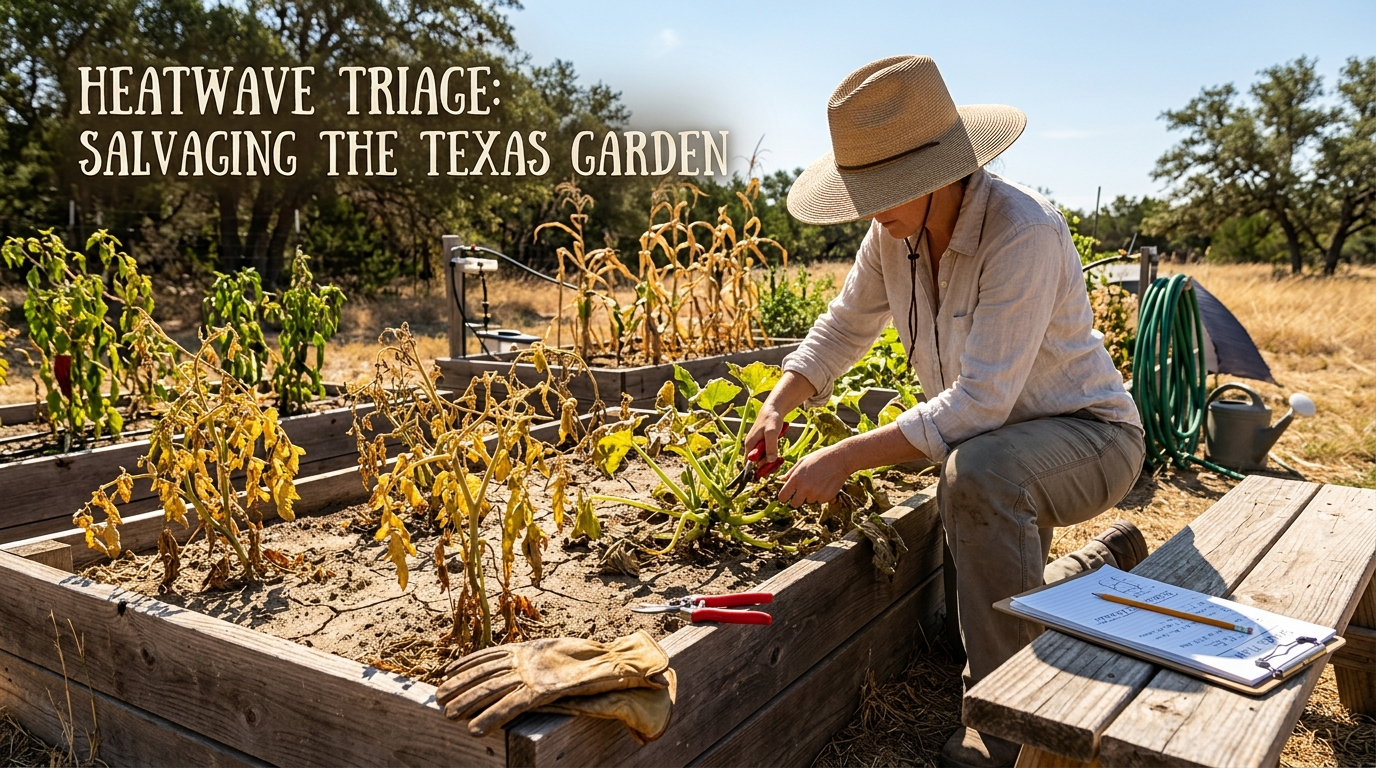
By late August in South Texas, most of us are past pretending. The lawn has gone from green to straw to something crunchy underfoot. The beds look tired. And if you’ve been out there every evening dragging a hose from one thirsty corner to another, you already know: that’s not land care, that’s triage. It’s necessary, but it isn’t a plan.
Let’s talk about making that shift — from reacting to the heat to preparing, deliberately, for what’s coming next. Because here in South Texas, we get a gift most of the country doesn’t: a second spring. Cooler nights are on the way, fall planting season is close, and the work you do right now determines how well your soil — and everything living in it — makes that turn.
Where We Actually Are Right Now
Let’s be honest about the state of things. Weeks of triple-digit heat and evaporation have done real damage below the surface, not just above it. Bare, sun-baked soil isn’t just dry — it’s lost structure. The soil food web (the bacteria, fungi, and micro-arthropods that actually make nutrients available to your plants) doesn’t do well at high soil temperatures with no moisture buffer. Compaction increases. Organic matter oxidizes off faster than it should. A lot of what looks like “the grass just needs water” is actually “the biology needs help.”
So before we talk about fall prep, one honest checkpoint: are you still chasing evaporation, or are you ready to start rebuilding?
The Turn: From Reactive to Intentional
1. Top-Dress With Compost — Now, Not Just at Fall Planting
Waiting until October to add organic matter is a missed window. Compost applied now does double duty:
- It buffers soil temperature. A half-inch to one-inch layer worked lightly into the surface (or simply top-dressed over turf and beds) insulates the soil food web from the worst of the afternoon heat.
- It rebuilds what August burned off. Every week of scorching sun oxidizes organic matter. Compost replaces it, feeding the fungal and bacterial populations that will need to be active again once temperatures drop and fall seeding begins.
- It preps the seedbed early. Compost added now has weeks to integrate before you’re putting fall seed or transplants into the ground, rather than fighting fresh, unsettled material at planting time.
Task: Screen or break up finished compost, and apply a light top-dress layer to stressed beds and thin turf areas this week. Don’t till it in aggressively — let the soil biology (and a little irrigation) pull it down naturally.
2. Manage Shade Deliberately
Shade in August isn’t just about comfort — it’s a soil temperature tool. Exposed soil can run 20–30°F hotter than shaded soil, which is enough to stall biological activity outright.
Task:
- Where you can, use shade cloth (30–40% is generally enough for most beds) over vegetable and ornamental beds still in active growth.
- For turf areas that are struggling, resist the urge to scalp anything right now — let grass blades stay a bit taller to shade their own root zone and the soil surface beneath them.
- Mulch bare soil in beds heavily (3–4 inches of coarse mulch) anywhere it’s still exposed. Bare dirt in August is a wound; treat it like one.
3. Let the Beds Rest
This is the piece that goes against instinct. When things look scorched, the urge is to do more — more water, more fertilizer, more activity. But right now, especially in beds you intend to seed for fall, the better move is often to back off and let the system settle.
- Stop heavy fertilization in stressed beds. Pushing new growth into heat-stressed plants and soil biology rarely ends well.
- Reduce disturbance. Hold off on digging, dividing, or transplanting until temperatures start easing.
- Water deeply but infrequently, rather than in the light daily sips that keep roots shallow and encourage evaporation loss.
Rest isn’t neglect — it’s giving the soil food web room to recover before you ask it to support a new round of growth.
4. Know What’s Ready to Go In This Month
Once beds are top-dressed, shaded, and rested, September gives South Texas growers a real head start on the fall garden. Soil temperatures are still warm enough for good germination, and there’s just enough runway before first frost for a lot of crops to mature.
Good direct-sow candidates for September:
- Beans (bush varieties)
- Beets
- Carrots
- Chard
- Collards
- Cucumbers
- Kale
- Lettuce (leaf types tolerate the early-month heat better than head lettuce)
- Mustard greens
- Radishes
- Turnips
- Winter squash and pumpkins (early September, for a longer maturity window)
Better started as transplants this month:
- Broccoli
- Brussels sprouts
- Cabbage
- Cauliflower
- Tomatoes (set out early September for a fall crop before frost)
- Peppers (if not already established from spring)
A practical note: hold off on the more heat-sensitive direct-sow crops (lettuce, beets, carrots) until the back half of the month if temperatures are still running hot, or give them afternoon shade cloth for the first couple of weeks. The compost top-dress and mulch work from earlier in this entry will make a real difference in germination rates here — cooler, more consistent soil moisture is exactly what these seeds need to get established.
Looking Ahead: The Second Spring
South Texas fall planting typically opens up as we move through September and into October, once nighttime lows start dropping consistently. The beds you top-dress, shade, and rest now will be in far better shape to receive seed and transplants than beds that limped through August under constant stress.
This is the essence of stewardship over straight maintenance: maintenance reacts to what’s dying in front of you. Stewardship looks past the current stress toward the season the land is actually heading into, and prepares accordingly.
Closing Thought
“Let us not grow weary in doing good, for in due season we will reap, if we do not give up.” — Galatians 6:9
August has a way of testing anyone’s resolve to do this work well. It’s easy, dragging a hose at 7pm for the third day in a row, to wonder if any of it matters. But the compost you spread this week, the shade cloth you bother to put up, the beds you choose to leave alone rather than over-work — none of that is wasted effort. It’s exactly the kind of unglamorous, in-season faithfulness that sets up a strong fall turn.
The heat devours. But it doesn’t get the last word — the mist, the rest, and the turning season do.
Have questions about your specific soil situation, or need a hand with the physical work of getting beds ready for fall? At Tecolote Ideations, we are always glad to talk through it — reach out through www.tecoloteideations.net.