



Embracing the Disarray of Late Summer
In the early days of spring, it is easy to dream in straight lines. We map out pristine nursery beds, tight grids, and manageable schedules. At the beginning of the growing season, we all enjoy the sight of pretty gardens and nice rows. However, as the season progresses and the heat sets in, those clean edges inevitably give way, leaving our gardens and projects looking far more haphazard and unkempt.
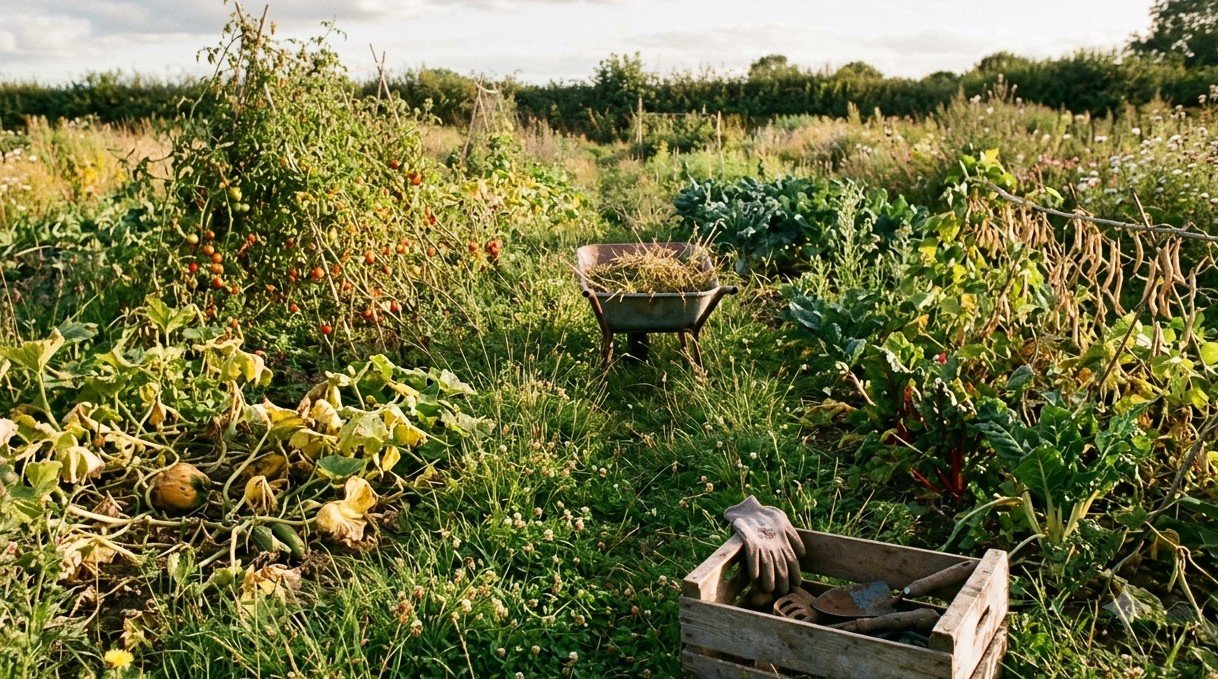
We often view this late-season disarray as a personal failure or a sign that we have fallen behind. But if we look closely at the South Central Texas landscape, there is a profound purpose in the mess. When a garden becomes overgrown late in the season, it is frequently because the plants have set seed and sprawled outward to shield the underlying soil from baking in the relentless heat. What appears to be an unkempt surface is, in reality, a brilliant survival strategy. The garden hasn’t failed; it has matured, adapted, and accumulated the necessary experience to endure.
The Internal Landscape
As we navigate our own “Ideation Journey,” our internal lives follow a similar trajectory. We start our personal and professional endeavors with rigid schedules and pristine expectations. Yet, as we face the real-world heat of unexpected obstacles and shifting priorities, our neat plans grow tangled. We must learn to reframe this haphazard state not as a defeat, but as natural maturity. This brings a deeper resonance to the wisdom found in Ecclesiastes 7:8:
”The end of a matter is better than its beginning, and patience is better than pride.”
The beginning of the matter—the spring planting—is full of prideful geometry and control. But the end of the matter is the tangled, sprawling harvest that has actually survived the trial of the summer. To accept this transition requires a yielding of our own ego, perfectly captured in Sirach 3:18:
”Humble yourself the greater you are.”
True stewardship requires the humility to let go of our controlling grip on the landscape and our lives. Growth isn’t just about straight string lines; it is about allowing the tangle to do its necessary, sheltering work.
This week, as you look at the overgrown corners of your yard or the frayed edges of a personal project, do not rush to trim it all back into perfect shape. Respect the survival strategy of the tangle.