





Permaculture and the Sanctity of Life
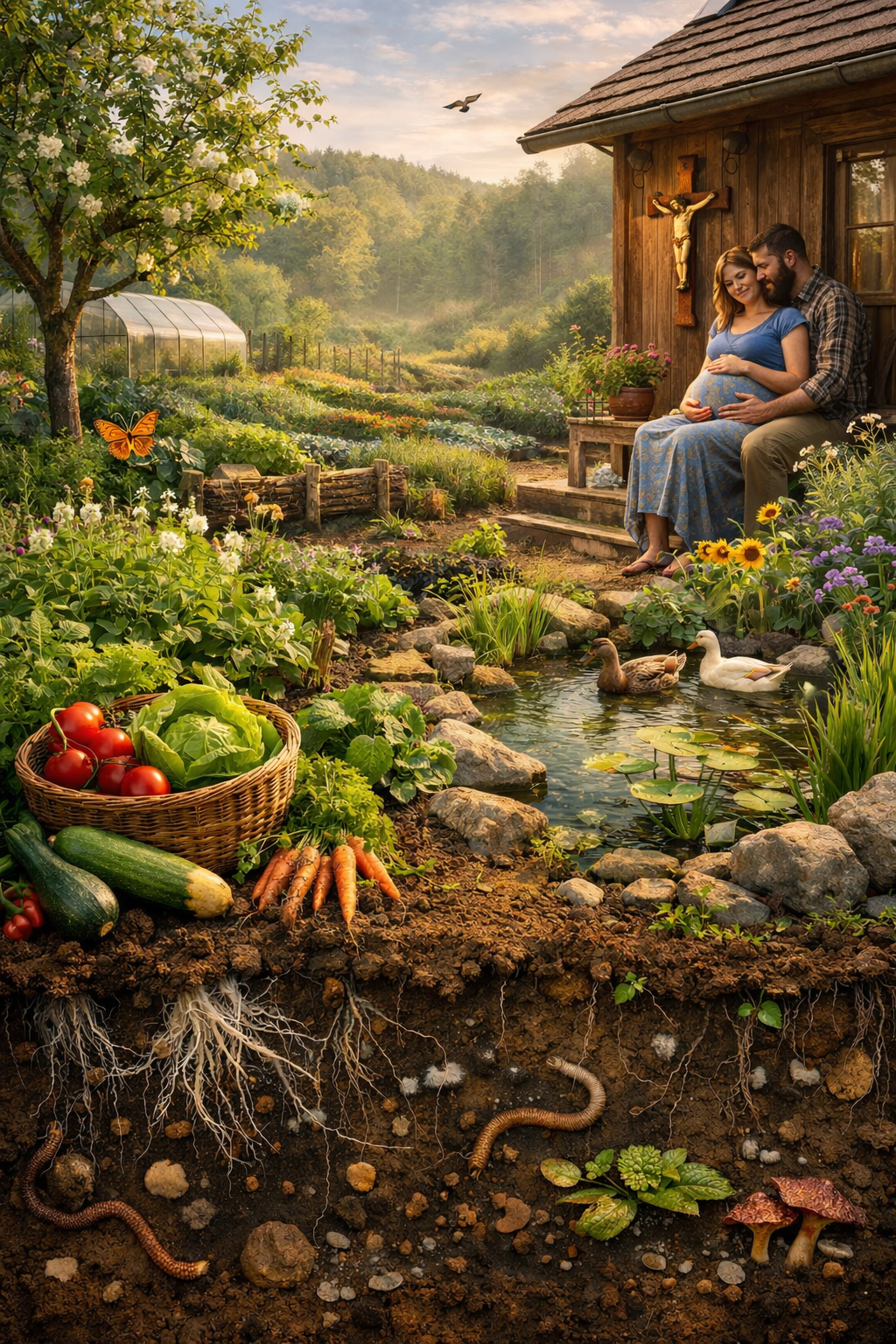
Permaculture invites us to rethink how we relate to the land. Rather than treating soil, water, plants, and animals as isolated resources to be managed, permaculture views them as parts of a living, interconnected whole. At its heart, it is a design philosophy rooted in observation—learning how natural systems function and then working with them rather than against them. In this way, permaculture offers a compelling image for the sanctity of life: it mirrors the womb of creation itself.
What Is Permaculture?
The word permaculture comes from “permanent agriculture,” though it has grown to mean much more. Permaculture is a way of designing human environments—gardens, farms, homes, and communities—so they reflect the resilience and abundance of natural ecosystems.
Instead of relying on constant external inputs like synthetic fertilizers, heavy tillage, or chemical controls, permaculture focuses on:
- Healthy soil built through organic matter and living roots
- Diversity, where many species support one another
- Careful water management, slowing and storing rainfall
- Observation and patience, allowing systems to mature over time
A well-designed permaculture system becomes increasingly self-sustaining, regenerative, and life-giving. It is not about forcing growth, but about creating the right conditions for life to emerge and thrive.
The Land as a Place of Formation
This approach closely resembles the work of a womb. In a womb, life is not manufactured; it is formed. Protection, nourishment, and timing matter more than speed or output. Permaculture operates under the same assumptions. Soil is covered and fed rather than exposed and depleted. Young plants are sheltered by nurse species. Microbes, fungi, insects, and roots collaborate in ways that are mostly unseen but essential.
Mulch acts as a protective layer, moderating temperature and retaining moisture, much like the womb protects developing life. Polycultures—many plants growing together—create resilience and mutual support, reducing the need for intervention. Life unfolds in relationship, not isolation.
Known Before Productivity
Modern culture often assigns value based on usefulness or yield. Permaculture quietly resists this mindset. In healthy ecosystems, every organism has a role, even if its purpose is not immediately obvious. Life is valued because it is, not because of what it produces.
Scripture affirms this truth powerfully:
“Before I formed you in the womb I knew you,
before you were born I set you apart.”
— Jeremiah 1:5
The sanctity of life is rooted in being known and intended, not in performance. Permaculture echoes this by honoring early stages of growth—seedlings, soil organisms, slow processes that may take years to reveal their full impact.
Patience, Care, and Responsibility
Permaculture teaches restraint. Overworking the soil, over-pruning, or over-harvesting can disrupt the delicate balance that sustains life. Instead, the practitioner becomes a steward—watching, responding, and adjusting with care. This posture fosters reverence. When we treat the land as a place of formation rather than extraction, our actions naturally become more ethical, more gentle, and more life-affirming.
A Living Witness
Seen through this lens, permaculture becomes more than a set of techniques. It is a lived philosophy that reflects a deeper truth: life is sacred, interconnected, and deserving of protection. Just as the womb shelters what cannot yet protect itself, permaculture systems are designed to cradle life until it can stand, root, and reproduce on its own.
In tending soil this way, we are reminded that creation itself was designed with care—and that our role within it is not to dominate, but to nurture.