






On Being Sharpened for Service
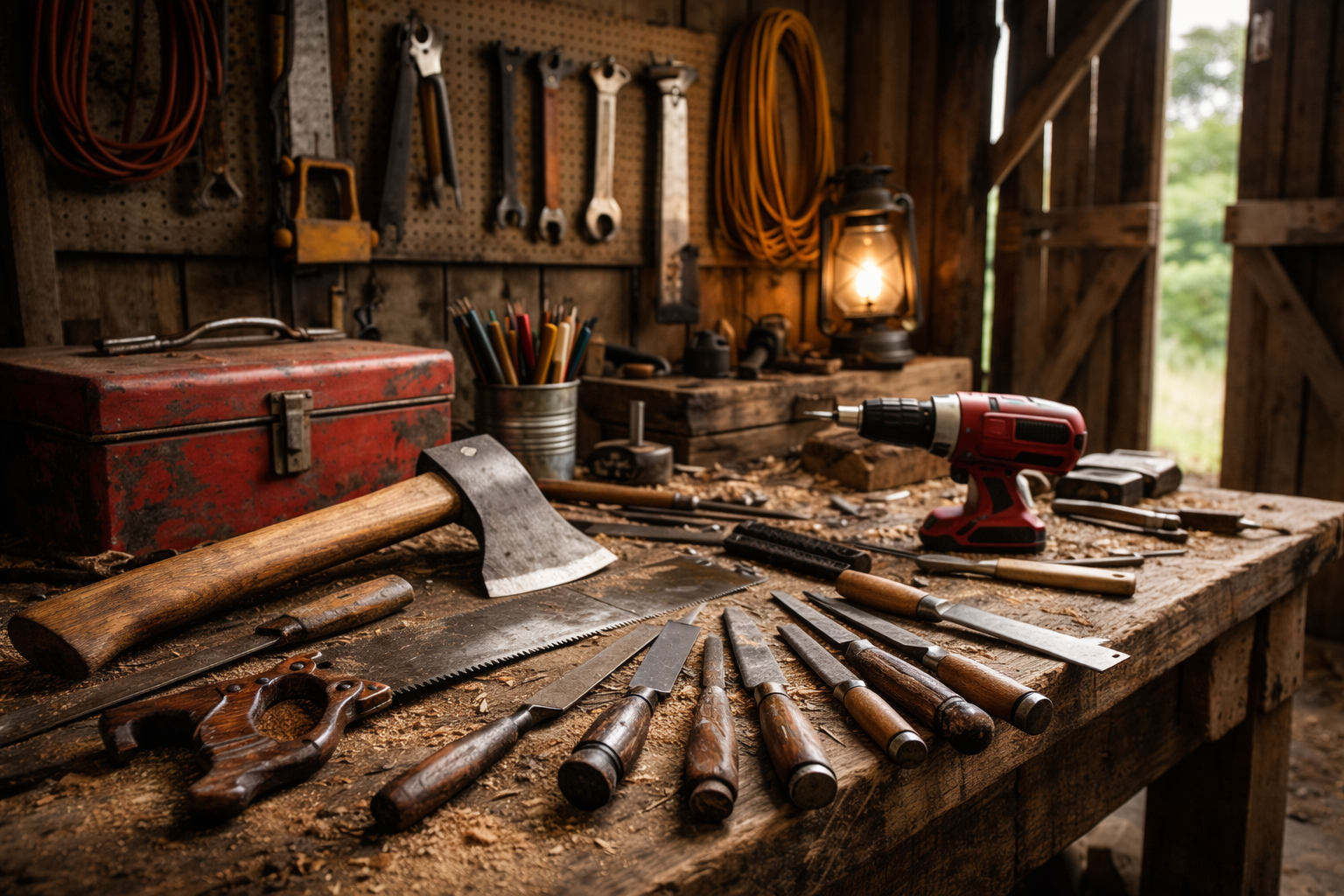
I spent some time recently in the shop, going through the “TO-DO” list. At the top of that list was a simple but tedious task: find files and sharpen tools.
When you’re in the middle of the season, it’s easy to ignore a dull edge. You just push harder. You use more muscle to compensate for a spade that won’t bite or shears that mangle the branch instead of slicing it. But eventually, you realize you aren’t being efficient; you’re just being stubborn. Maybe it’s just me?
In the spiritual life, and in our service to others, we often do the same thing. We try to serve God with “dull” souls.
1. The Necessity of the File
A tool cannot sharpen itself. It requires a file—something harder than the steel itself—to grate against it and remove the burrs.
In our service to others, the “file” is often the community or the Church. Sirach 12:13-14 reminds us that just as a person doesn’t pity a snake charmer who gets bitten, we have to be careful about the company we keep. But the right company, and the right discipline, grinds away our ego.
Service to God requires us to submit to the “filing” process. It’s uncomfortable. It involves losing a bit of ourselves so that the edge God needs can actually emerge.
2. The Greatness of the Craftsman and the Tragedy of the Dull Edge
In the Book of Wisdom (13:11), we see a master craftsman at work:
“A skilled woodcutter may saw down a tree… and craftily strip off all its bark, and then with his art work it skillfully, and make a vessel that serves the needs of life.”
Think of the “art” and the “skill” mentioned there. A master craftsman has the vision to see a finished vessel inside a rough log, and he has the strength to bring it forth. But even the most brilliant craftsman is hindered—and his art delayed—by a dull tool.
Imagine a master woodcarver trying to execute a delicate, life-giving detail with a chisel that hasn’t seen a file in years. Instead of a clean slice, he gets a ragged tear. Instead of a masterpiece that “serves the needs of life,” he is forced to spend his energy fighting the tool rather than finishing the work.
When we offer ourselves in service to God but refuse the discipline of “sharpening”—the prayer, the study, and the penance—we become that dull chisel. We don’t just make the work harder for ourselves; we hinder the expression of the Master’s art in the world. God can do great things through us, but His “skill” is most visible when His tools are sharp enough to handle the precision of His grace. To be a “vessel that serves life,” we must be willing to let the Craftsman strip away our dull edges, so that when the moment for great work arrives, we are a help to His hand, not a hindrance.
3. Service as “Proper Use”
A tool is only “happy” (if a tool could feel) when it is doing what it was made for. A shovel is miserable sitting in a shed; it was made for the resistance of the earth.
We often think of service to others as a chore or an extra “task” on our calendar. But if we view ourselves as tools in the hand of the Craftsman, service becomes our proper use.
- Are we currently “dull” from lack of prayer and reflection?
- Are we sitting in the shed, avoiding the work because we don’t want to get dirty?
- Or are we willing to let the Craftsman pick us up, even if it means he has to sharpen us first?
The Takeaway
Service isn’t just about what we do; it’s about the state of the tool. This week, as you pick up a tool—whether it’s a shovel in the dirt or a pen at your desk—ask yourself: Is this tool ready? And am I letting the Craftsman shape me into something that serves the needs of life?
Suggested scripture references for your study:
- Wisdom 13:11: The craftsman making a vessel that serves life.
- Sirach 38:27: Describes the smith sitting by the anvil, “his ear is deafened by the noise of the hammer, and his eyes are fixed on the pattern of the object.” (A great image for focused service).
- Proverbs 27:17: “As iron sharpens iron, so one person sharpens another.”
Remember: Sharpening of tools takes place in the quiet of thought. Our “spiritual” sharpening takes place in similar quiet and silence. Take a moment or two, gather your intentions, and pray that they might be found fulfilled for us.