


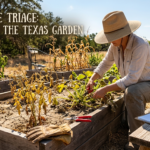


For gardeners in South Central Texas—from Seguin to San Antonio and beyond—winter is less of an ending and more of an essential strategic pause. While our northern neighbors are battling blizzards, we enjoy a unique climate advantage: a period of mild dormancy punctuated by the occasional, sharp hard freeze. This season is not for rest; it’s for highly focused tasks and seizing planting opportunities that are unavailable elsewhere.
This is the advice echoed in regional wisdom, from publications like Central Texas Gardener to time-tested horticultural books: The work you do now, when the garden seems quietest, dictates the success of your spring and summer bounty.
🧤 Critical Task: Protection and Pruning
The biggest challenge in this region is the unpredictability of the cold. The most critical task is freeze protection. Never assume the weather will hold.
- Tender Plants: Citrus trees, containerized tropicals (like bougainvillea or elephant ears), and non-native succulents must be moved indoors or clustered together and covered with frost cloth (avoid plastic sheeting, which traps moisture and can damage leaves).
- Watering: Contrary to intuition, keeping the soil moist provides insulation. Water deeply the day before a hard freeze is expected, as wet soil retains heat better than dry soil.
- Pruning Timing: This is the time to resist the urge to tidy up everything. Do not prune back frost-damaged plants; the dead material insulates the rest of the plant against subsequent freezes. Wait until after the average last frost date, typically around mid-February to early March. The one major exception is fruit trees and roses, which benefit from major structural pruning in mid-to-late January.
🌿 Cool-Season Crops and Bare-Root Gold
Our mild winters create a massive planting opportunity for cool-season varieties. If you’re not growing in January and February, you are missing out on one of the great advantages of gardening in South Central Texas!
- Vegetable Garden: Direct-sow seeds for spinach, kale, Swiss chard, carrots, radishes, and leafy greens. This is also the perfect window to plant onion sets and seed potatoes for a late-spring harvest. These plants thrive in the cool weather and often produce a higher quality crop than when planted in the rapidly heating spring soil.
- Ornamentals: Add splashes of vibrant color with cool-tolerant annuals like pansies, violas, snapdragons, and dianthus.
- Bare-Root Planting: Late January and February are prime time for planting bare-root specimens. This includes roses, fruit trees (especially peaches, plums, and apples suited to our low-chill requirements), and berries (blackberries and raspberries). Planting bare-root saves money and allows the plants to establish a robust root system before the stress of summer heat arrives.
🌱 Preparing the Foundation: Feed the Soil
Just like the theme of your personal blog post, the winter months are when the soil rebuilds its resilience. This is the opportunity to become a better steward of your land without the rush of peak season.
- Compost: Apply a heavy layer of finished compost to all dormant vegetable beds and around permanent plantings. Compost acts as a mulch, insulating the roots, and slowly releases nutrients that will be available once spring growth begins.
- Soil Amendment: Work in organic materials like expanded shale (to improve drainage in heavy clay) and molasses (to feed beneficial microbes).
- Cover Crops: If a bed is sitting empty, it is an opportunity to plant a cover crop like winter rye or hairy vetch. These crops prevent erosion, suppress weeds, and, when cut down in spring, add valuable organic matter (nitrogen) back into the soil, acting as nature’s fertilizer.
The South Central Texas winter garden is a quiet workshop—a place to plan, protect, and plant the seeds of next season’s success.