

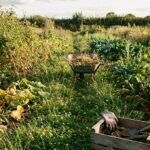

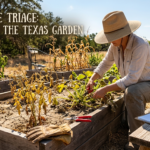


The calendar has turned to December, and for those of us practicing stewardship in South Central Texas, the garden has settled into its annual stillness. The basil is gone, the vines are cut back, and the live oaks, though ever-present, cast shadows over beds that appear, at first glance, empty. In this deep quiet, it is easy to mistake the pause for an ending, to see the sleeping landscape as a dead one.
But dormancy is not death. It is a strategic, powerful pivot—a masterclass in energy management and resilience.
The Great Retraction
For the plants themselves, dormancy is simply the wisdom of retraction. As daylight shortens and temperatures drop, their energy is not dissipated on producing flashy flowers or tender new leaves. Instead, it is pulled back, deep into the secure fortress of the root system. Every bulb, tuber, and taproot becomes a dense storage unit, patiently holding the promise of spring. The visible world ceases its frantic activity so that the invisible world can begin its deep work of renewal.
This intentional withdrawal serves as a vital blueprint for our own lives. How often do we feel pressured to be constantly productive, to generate blooms in every season? The dormant garden reminds us that there is profound courage in the decision to rest and consolidate energy, allowing the superficial growth to fall away so that the essential strength can be preserved.
The Living Factory Underground
And while the surface seems frozen in time, the earth beneath our feet is anything but inert. The soil—the very foundation of our practice of stewardship—is a vibrant factory running in the dark.
This is the season when the mycelial networks—the vast, subterranean fungal connections—expand and strengthen, acting as the soil’s internet, cycling nutrients and transmitting water. Microorganisms are slowly breaking down the autumn’s organic detritus, transforming last season’s spent material into next season’s fertile humus. Water percolation and filtration are working in silence, cleansing the ground for the spring rains.
The work of building true soil health is not flashy; it is patient, unseen, and utterly essential. A good steward understands that winter is the soil’s time to breathe and rebuild its complex chemistry, setting the stage for the explosive growth that lies ahead.
Embracing Your Own Stillness
As we tend to the land, we are offered a gentle invitation to tend to ourselves in the same way. If the external signs of your personal development or creative path seem to have slowed, do not despair. Perhaps you are simply in a season of dormancy.
What stored energy are you consolidating in your own depths? What quiet internal processing is happening that the world cannot yet see? Trust the process that is unfolding beneath the surface of your conscious effort. The lessons learned, the connections made, and the strength you are building during this period of stillness are not wasted.
Wait patiently, tend to the fundamentals, and protect your precious reserves. For just as the vibrant life of the garden depends on the deep, unseen labor of winter, your most magnificent bloom awaits the necessary rest of your dormant soul. The life is still there; it is simply gathering its strength.